Rhinoplasty — nose reshaping — is the operation that can refine a bump, narrow a wide bridge, lift or soften the tip, or improve the way the nose sits in profile. It can also, in some patients, help with certain breathing problems when those are part of the same plan.
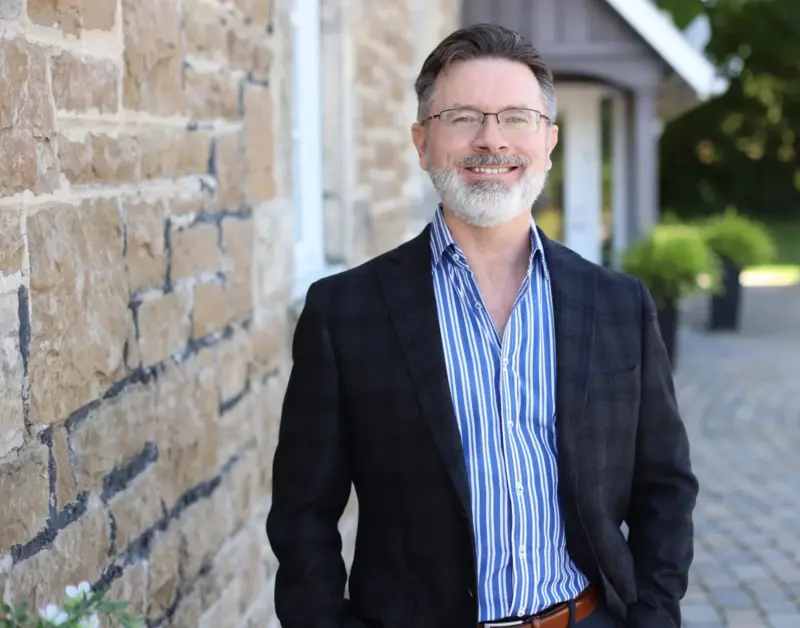
This guide is about the two main ways the operation is approached, open and closed, and about how to think about the decision before you sit down with a surgeon. It is not a catalogue of celebrity noses, and it is not a promise that every request can be met. The surgeon who would assess you is Dr. James Lacey, Royal College certified (FRCSC). He is the only surgeon at this practice, and he operates in the private surgical facility at 895 March Road, Kanata.
To book a consultation, call 613-591-1093 or use the form at the bottom of this page.
What rhinoplasty can and cannot do
Rhinoplasty can change the size and shape of the bridge, reduce a dorsal bump, adjust the width, refine the tip, and improve the relationship between the nose and the chin or lips in profile. It can straighten a nose that has twisted after an injury, within the limits of the scar and the remaining cartilage. When the septum or the internal valves are part of the problem, those can be addressed at the same time in a plan that is both functional and aesthetic.
It cannot give you someone else’s nose. The thickness of your skin, the strength of your cartilage, your healing and the rest of your face all set a range of what will look natural. Thick skin, for example, can hide a delicate cartilage change; very thin skin can show small irregularities. Dr. Lacey will tell you what your tissues will and will not allow, even if that is not what you first hoped to hear.
It also cannot be judged at two weeks. Swelling in the tip, in particular, takes many months to settle, and subtle refinement can continue for a year or more. Anyone who offers a final verdict from an early photograph is not describing this operation accurately.
Open and closed: what the words actually mean
Both approaches can produce excellent results. The difference is how the surgeon reaches the structures that need to be changed.
Closed rhinoplasty (sometimes called endonasal) uses incisions placed inside the nostrils. There is no external scar across the columella, the strip of tissue between the nostrils. The surgeon works through those internal incisions. It can be a very good approach when the changes are more limited — for example, a straightforward reduction of a bump — and when the tip does not need extensive reshaping.
Open rhinoplasty adds a small incision across the columella, which is then connected to incisions inside the nostrils so that the skin of the nose can be lifted and the framework of bone and cartilage can be seen directly. The columellar scar is usually a thin line that fades and is hard to notice in conversation, but it is a scar, and you should be willing to accept it if this is the approach recommended. Open rhinoplasty is often chosen when the tip needs careful work, when the nose is being revised after an earlier operation, or when the anatomy is more complex and visibility matters.
Neither word is a synonym for “better.” An open approach is not automatically more “serious,” and a closed approach is not automatically more “modern.” What matters is that the approach matches the job. Dr. Lacey will recommend one or the other after he has examined you, not because one technique is the house style.
Other choices that come up in the same visit
Approach is only one decision.
- How much to change. A modest bump reduction that keeps your character is a different operation from a dramatic profile change. The first is more often the wiser plan.
- The tip. Rotating, supporting or refining the tip is some of the most delicate work in rhinoplasty. It is also the part that stays swollen the longest.
- The septum and the airway. If you do not breathe well through one or both sides, that belongs in the consultation. A nose that looks finer but breathes worse is not a success.
- Chin and profile. Sometimes the profile looks “nose-heavy” in part because the chin is recessed. If that is the case, Dr. Lacey will say so. This site does not have a standalone chin-surgery page; any discussion of the chin will be part of your facial plan, not a separate advertised procedure.
- Revision. A second rhinoplasty is a different operation from a first one, with more scar, less available cartilage, and more modest goals. If you have had surgery already, bring the records you have.
Talk it through with Dr. Lacey
A consultation is a conversation, not a commitment. You will leave with an honest opinion and, if surgery makes sense, a written quote.
Who tends to be a good candidate
You may be a reasonable candidate if you are in good health, your facial growth is complete, you have a specific, describable concern (a bump, a droop, a width, a twist, a breathing problem), and you can accept a period of swelling and a result that is an improved version of your nose rather than a new identity.
You may be asked to wait, or to think again, if your hopes are built entirely on a photograph of someone else, if you are still in the middle of a major life stress that is doing the deciding for you, or if a medical issue needs attention first. If you take a GLP-1 medicine such as Ozempic, Wegovy or Mounjaro, mention it when you book; it can affect anesthesia planning.
Teenagers sometimes ask about ear pinning or about a nose that is causing real distress. Those conversations are careful, involve the family, and only go ahead when growth and motivation are both right. The adult-focused pages on this site are not a short-cut around that judgement.
Recovery
You go home the same day, with a responsible adult. A splint on the bridge is common for about a week. There may be packing or internal support, which you will be told how to live with and when it comes out. Bruising around the eyes, if it occurs, usually peaks early and then fades over the following days to a couple of weeks. You should keep your head elevated, avoid blowing your nose until you are allowed to, and stay away from glasses resting on the bridge until Dr. Lacey says they are safe — or use a workaround he recommends.
Most people with desk work plan about one to two weeks away, often timed so that the splint is off before they return. Exercise, especially anything that risks a knock to the face, waits longer. Contact sports and similar activities are delayed until you are cleared, sometimes for many weeks. The tip will still feel stiff and look a little swollen when you go back to your ordinary life; that is expected, not a sign that something is wrong.
You will have follow-up visits so the splint can come off, the early healing can be checked, and — much later — the settled result can be reviewed. Follow-up with Dr. Lacey is included in the surgical care.
Cost
The current listed price for rhinoplasty is $15,000. That figure includes the surgeon, anesthesia and the private surgical facility. A written quote after your consultation will confirm the plan; a more complex revision, or a combined plan that includes other facial surgery, would be quoted accordingly.
Financing is available through Beautifi, with terms of six months to six years. See financing. Cosmetic rhinoplasty is private-pay. If part of your concern is breathing, bring that to the consultation so the plan and the funding picture can be discussed accurately, rather than assumed.
The consultation
A good rhinoplasty consultation is unhurried. Dr. Lacey will look at your nose from the front, in profile and from below, watch how it moves when you smile, and listen to what you want changed and what you want to keep. Photographs are typically taken so that you can look at the same views together. He will talk about open versus closed, about what your skin will show or hide, and about recovery.
Please do not feel you have to know the vocabulary before you arrive. “I dislike this bump,” or “the tip feels heavy,” or “I cannot breathe on the left” is enough to start.
The private surgical facility is at 895 March Road, Kanata, with free parking. Call 613-591-1093 or send a message with the form below.
Questions
Frequently asked questions
What is the difference between open and closed rhinoplasty?
Closed rhinoplasty uses incisions inside the nostrils only. Open rhinoplasty adds a small incision under the tip, across the columella, so the framework can be seen directly. The choice depends on the work your nose needs, not on which word sounds more advanced.
Will I have a visible scar?
A closed approach leaves no external columellar scar. An open approach leaves a small scar under the tip, which usually fades to a fine line. You will be shown where that line would sit.
Can rhinoplasty help me breathe as well as change the shape?
Sometimes, yes, if the septum or the valves are part of the problem and are treated in the same plan. A purely cosmetic change will not, on its own, fix every breathing complaint. The examination will sort this out.
How much does rhinoplasty cost?
The current listed price is $15,000, including the surgeon, anesthesia and the private surgical facility. You will receive a written quote after your consultation.
How long will I be bruised or swollen?
Bruising, if it happens, usually eases over one to two weeks. Swelling, especially in the tip, lasts much longer and can take many months to settle fully.
When can I go back to the gym or wear glasses?
When Dr. Lacey is satisfied that the bridge can take the pressure and the risk of a bump is low. That is later than most people hope. You will be given specific advice rather than a generic date from this page.
Can a bump on the bridge be treated without changing the tip?
Often, yes, and that is one of the situations in which a more limited, sometimes closed, approach may be enough. It still has to look right with the tip you have, which is why an examination matters. The blog also has a short piece on rhinoplasty for a dorsal bump.
Who performs the surgery?
Dr. James Lacey, Royal College certified (FRCSC). He is the only surgeon at this practice.
Where is the surgery performed?
At the private surgical facility at 895 March Road, Kanata. Consultations and follow-up visits are at the same address.
Is cosmetic rhinoplasty covered by OHIP?
Cosmetic rhinoplasty is private-pay. Questions about breathing and any other coverage should be raised at your visit so you have an accurate picture.