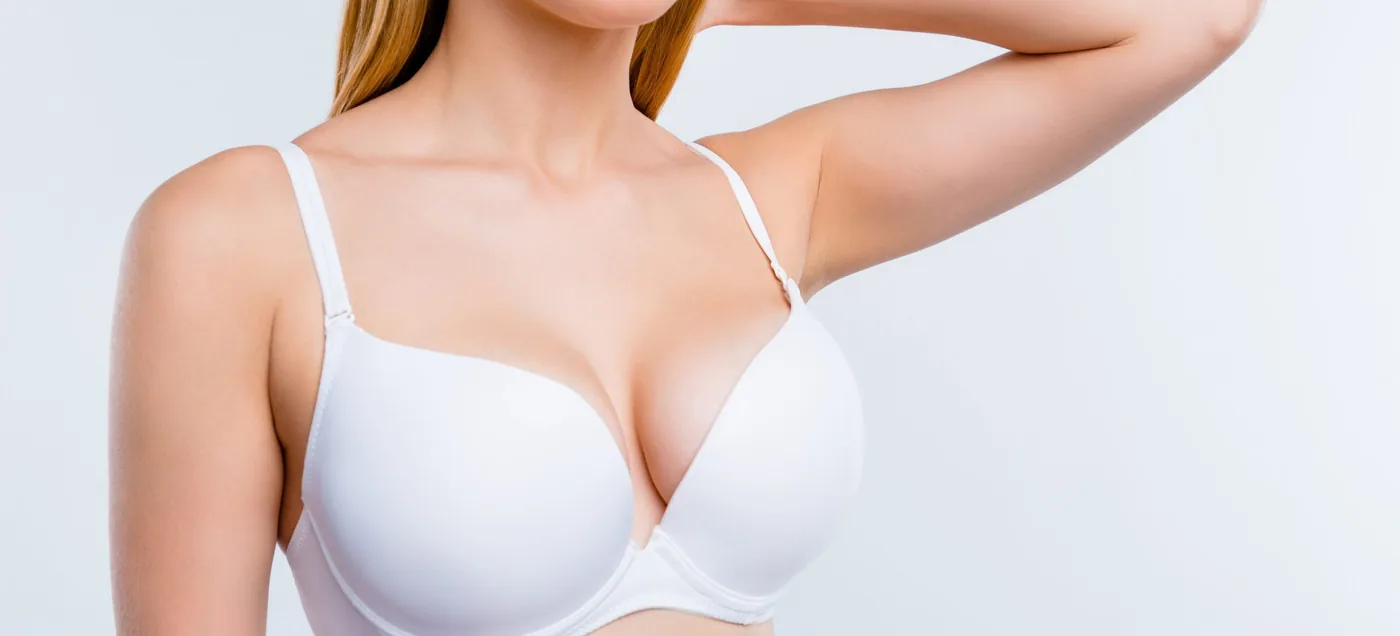
This page compares saline and silicone, and explains incisions, placement and follow-up in plain language. It is a companion to the breast augmentation options guide, not a replacement for it.
Dr. James Lacey, a plastic surgeon who is Royal College certified (FRCSC), will make these choices with you, not for you from a single default. Surgery takes place at the private surgical facility at 895 March Road, Kanata. Call 613-591-1093 or use the form below to book a visit.
Silicone and saline, side by side
Silicone implants are filled with a silicone gel. Many people choose them because the gel can feel closer to breast tissue, and because rippling may be less obvious in a slender chest. They come pre-filled, so the incision has to be large enough to place the device.
Saline implants are filled with sterile salt water after they have been placed, which can allow a slightly smaller incision and means the fill volume can be adjusted during surgery. If a saline implant leaks, the salt water is absorbed by the body and the breast usually visibly deflates, so a problem is easier to notice. The feel can be less natural than gel in some patients, especially if the tissues are thin, and rippling can be more apparent.
Neither type is “the safe one” and the other “the risky one.” Both are medical devices, both can need to be revised or replaced over a lifetime, and both should be followed. Dr. Lacey will talk about feel, incision, your amount of existing tissue, and your preference, then recommend a type that fits that starting point.
Those details, including any risks that belong in formal consent, are part of the consultation.
Incisions
The three incisions most often discussed are:
- Inframammary — in the fold under the breast, usually hidden by a bra or swimsuit. This is a common, versatile approach and is described further in a blog post on the inframammary incision.
- Periareolar — along the edge of the areola, using the change in colour as camouflage. It can be a good option in some anatomies and is not automatically better or worse; see the areolar incision post.
- Transaxillary — in the armpit, off the breast itself, visible if the arms are raised. See the transaxillary post.
Each leaves a scar. The “best” incision is the one that lets Dr. Lacey place the implant accurately in your chest, with a scar you can accept.
Placement
Implants may sit behind the breast tissue, behind the pectoral muscle, or in a dual plane that uses a bit of both. Placement affects the upper slope of the breast, the coverage over the device, and the movement you may feel when the chest muscle contracts. There is no single placement that suits every chest. Thin tissue often needs more coverage; a very athletic chest wall may make certain placements less comfortable. This is decided with you, on examination.
Living with implants
You should plan for a long relationship with the device. Implants can ripple, shift, or develop tightness in the scar capsule around them. They can, in a small number of cases, be involved in more serious problems that belong in the consent conversation, not in a marketing paragraph. They are not lifetime devices in every patient. Revision is listed at $12,000 – $15,000, removal at $2,000 – $13,000 depending on technique, and a check-up visit at $200. Those operations are summarized on the breast hub.
Regular follow-up is part of responsible care. If something feels different — a change in shape, firmness, or comfort — come in rather than waiting.
Talk it through with Dr. Lacey
A consultation is a conversation, not a commitment. You will leave with an honest opinion and, if surgery makes sense, a written quote.
Cost and recovery, in brief
Breast augmentation with implants is listed at $12,000, including the surgeon, anesthesia and the private surgical facility. Recovery is covered on the recovery page. Many people with desk work are back within one to two weeks; lifting and vigorous exercise wait longer.
Financing is available through Beautifi, with terms of six months to six years. See financing and the cost page.
The consultation
Bring a well-fitting bra and a sense of the clothes you want to feel better in. Sizing is done with your measurements and, where it helps, sizers. You will talk about saline versus silicone, incision and placement, and you will leave with a written quote if you go ahead.
Call 613-591-1093 or use the form below. There is free parking at 895 March Road, Kanata.
How this comparison should be used
This page exists so you can arrive at a consultation already clear on the difference between saline and silicone, not so you can order a device from a website. The parent guide is breast augmentation options, which also covers fat transfer — a different operation, without an implant. Cost lives on breast augmentation cost. Recovery lives on its own recovery page.
Neither implant type will lift a descended breast. If position is part of the problem, start with breast lift versus breast implants rather than trying to solve a droop with a larger device.
Screening, replacement and living with a long-term device
Implants are long-term devices, not lifetime devices in every case. They can sit comfortably for many years, and they can also need revision or removal if a problem develops — a rupture, a shape change, a tightening of the scar capsule, or a simple change in what you want. What you should plan for is follow-up, and a willingness to come back if something feels or looks different.
If you have routine breast screening, tell the clinic and the imaging centre that you have implants, or that you are planning them. The presence of an implant changes how some images are taken; it is a practical detail, not a reason to avoid recommended screening.
What the consultation should settle
Dr. James Lacey, Royal College certified (FRCSC), will examine you, talk about the trade-offs of saline and silicone in your anatomy, and talk about incision and placement in specific terms. You should leave knowing which type he recommends and why, and whether a lift should be part of the plan. The listed figure for augmentation with implants is $12,000, including the surgeon, anesthesia and the private surgical facility. Your written quote follows the examination.
Cosmetic breast implant surgery is private-pay. Financing is available through Beautifi, with terms of six months to six years. See financing. The private surgical facility is at 895 March Road, Kanata, with free parking. Call 613-591-1093.
The breast augmentation album is a place to look at starting points and shape, not a way to order a size or a device by case number. A photo design plan will follow.
Questions
Frequently asked questions
Which feels more natural, saline or silicone?
Many people find silicone closer to the feel of breast tissue, especially if they have less of their own coverage. Saline is a good choice for some patients and has the advantage that a leak is usually obvious. The examination matters more than a rule.
Do silicone implants have to be smaller-incision or larger-incision than saline?
Silicone implants come pre-filled, so the incision must be large enough to place them. Saline implants are filled after placement, which can allow a slightly smaller incision.
How long do implants last?
There is no calendar date that applies to everyone. They should be followed, and revised or removed if there is a problem or if your preference changes.
Will I need a lift as well as implants?
If the breasts have dropped, yes, a lift may be part of the plan. Adding volume without lifting descended tissue can make heaviness more obvious.
Who does the surgery?
Dr. James Lacey, Royal College certified (FRCSC). He is the only surgeon at this practice.
Where is the surgery performed?
At the private surgical facility at 895 March Road, Kanata.
Do implants have to be replaced after a set number of years?
Not on a fixed calendar published from this page. They are long-term devices, and they can need revision or removal if a problem develops, or if your goals change. Follow-up, and coming back if something changes, is the honest plan.
Will implants get in the way of breast screening?
Tell the imaging centre that you have them, or that you are planning them. Images are often taken a little differently. Screening should still be part of your ordinary care.