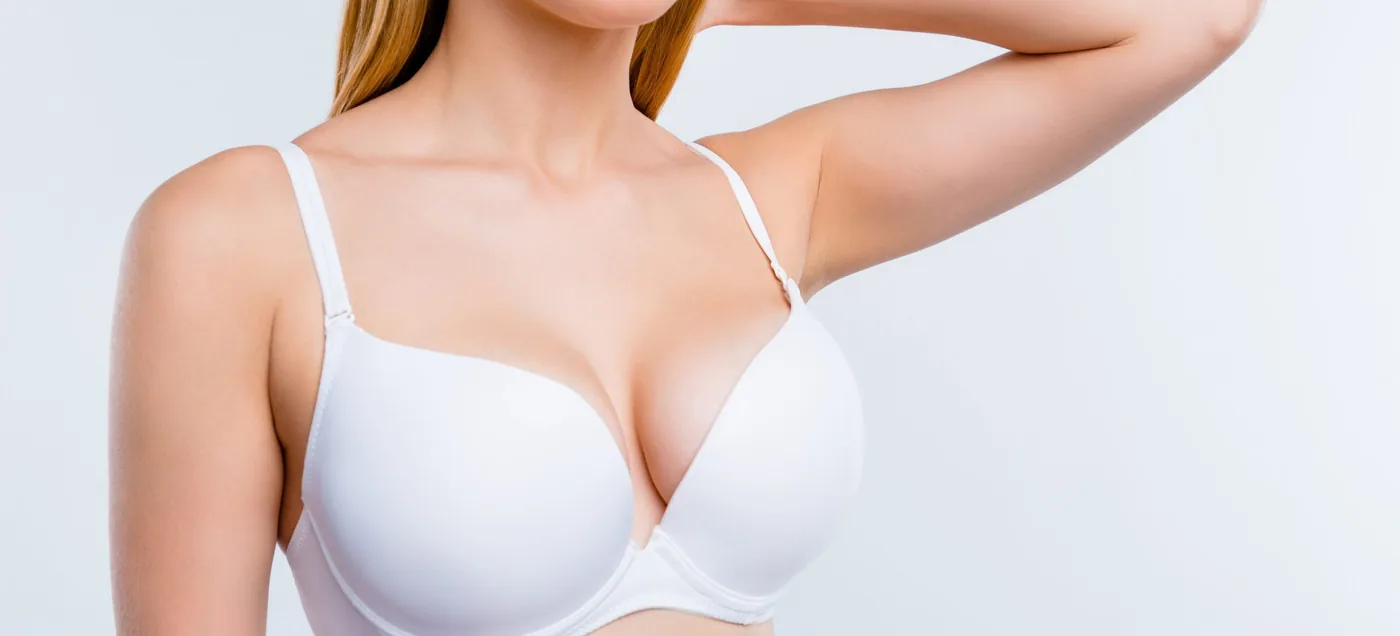
There is more than one way to add volume, and the “right” way depends on your frame, your skin, how much change you want, and whether you prefer a device or your own fat.
This guide walks through those choices: implants (silicone or saline) versus fat transfer, where incisions can be placed, what recovery generally involves, and what the current prices are. The detail on implant types also has its own page, and there are dedicated pages for cost and recovery. The aim here is to help you arrive at a consultation already able to ask good questions.
Dr. James Lacey, a plastic surgeon who is Royal College certified (FRCSC), performs every breast augmentation at this practice. Surgery takes place in the private surgical facility at 895 March Road, Kanata. To book a visit, call 613-591-1093 or use the form below.
What breast augmentation can change — and what it cannot
Augmentation adds volume and can improve roundness, cleavage and the balance between the breasts and the rest of the torso. It can restore volume that was lost after pregnancy, breastfeeding or weight change. It cannot lift a breast that has dropped a long way on the chest wall. If the nipple sits low, or the skin is very loose, a breast lift, with or without implants, is usually the more honest plan. Mixing the two operations is common; choosing only the one you have heard the most about is how people end up disappointed.
Augmentation also cannot promise a copied result from a photograph of someone else. Dr. Lacey will look at your chest width, the thickness of your tissue, the position of the folds under your breasts, and any difference between the two sides — most people have one — and then talk about a size and shape that fit that starting point.
Two paths: implants or fat transfer
Breast implants
Implants remain the most direct way to add a predictable amount of volume. They may be filled with silicone gel or with saline, and they sit either behind the breast tissue or partly or fully behind the pectoral muscle, depending on your anatomy and the look you want. Each of those choices has trade-offs, which are covered in more depth on the saline versus silicone implants page.
What implants do well is give a clear, planned increase, including in patients who do not have much of their own fat or breast tissue. What you must be prepared to accept is that an implant is a device. It can need to be replaced or revised in the future, it will always be there on imaging and on examination, and you will be asked to come back for implant check-ups. A check-up visit is listed at $200 on the current price list.
The current surgical price for breast augmentation with implants is $12,000. That figure includes the surgeon, anesthesia and the private surgical facility.
Fat transfer
Breast augmentation with fat transfer uses liposuction to harvest fat from another area — often the abdomen, flanks or thighs — and places it in the breasts. The appeal is obvious: no implant, a slimmer donor area, and a softer, more incremental change.
The limits are just as important. Only a portion of the transferred fat remains, the increase is usually more modest than with an implant, and you need enough donor fat to make the procedure worthwhile. A second transfer is sometimes discussed later; on the current list, that second procedure, if needed, is $5,000 – $6,000. The first fat-transfer breast augmentation is listed at $15,000, again including the surgeon, anesthesia and the facility.
Fat transfer is not a shortcut around the need for a lift if the breasts have descended, and it is not the best tool when someone wants a large jump in size. It can be a very good tool when the goal is a natural-looking, moderate increase and the donor areas already bother you.
How to choose between them
A useful way to decide is to start with the result you want, not with the technique you have read the most about.
- If you want a clearly larger cup size and you are comfortable with a device, implants are usually the more reliable path.
- If you want a subtle increase, you have donor fat, and you prefer not to have implants, fat transfer deserves a serious look.
- If your breasts have emptied and also dropped, add a lift to the conversation before you settle on either method of adding volume.
- If the two breasts are quite different, the plan may use different volumes, or a combination of techniques, to bring them closer together.
Dr. Lacey will not ask you to choose from a catalogue in the waiting room. Sizing, in the case of implants, is done with you, using your measurements and, where it helps, sizers. For fat transfer, the plan starts with whether the donor sites can support the change you have in mind.
Talk it through with Dr. Lacey
A consultation is a conversation, not a commitment. You will leave with an honest opinion and, if surgery makes sense, a written quote.
Incisions, placement and the look of the scar
Implant incisions are most often placed in the fold under the breast (inframammary), sometimes around the areola, and less often in the armpit. Each has a rationale, and each leaves a scar. The inframammary scar usually hides in the fold under a bra or a swimsuit; a periareolar scar sits in the change of colour at the edge of the areola; a transaxillary scar is off the breast entirely but is visible if the arms are raised. The blog on this site has longer explanations of those three approaches, which you can read after, not instead of, a consultation.
Placement of the implant — above the muscle, below it, or in a dual plane — affects the upper slope of the breast, the animation you may feel when the chest muscle contracts, and the amount of coverage over the device. There is no single placement that is “best.” There is a placement that is best for your tissue.
Fat-transfer incisions are small, at both the donor sites and the breast, and typically fade to little marks. The donor sites also have the bruising, swelling and garment requirements of liposuction.
Recovery, in brief
Most people go home the same day. You will need someone to drive you and stay with you at first. Soreness, tightness and a heavy feeling in the chest are typical after implants; after fat transfer you will also have liposuction recovery in the donor areas. A support bra or a compression garment is usually part of the first weeks.
Many patients who do desk work are back within one to two weeks, sometimes sooner, depending on how they feel and on the kind of surgery they had. Lifting, overhead work and more vigorous exercise wait longer — often several weeks — until Dr. Lacey is satisfied that the implants, or the transferred fat, should not be disturbed. The recovery page sets this out in more detail. Your written instructions are the ones to follow.
If you take a GLP-1 medicine such as Ozempic, Wegovy or Mounjaro, or any other regular medicine, mention it when you book. It can affect anesthesia planning.
Cost and what the quote includes
From the clinic’s current list:
- Breast augmentation with implants: $12,000
- Breast augmentation with fat transfer: $15,000
- A second fat transfer, if needed: $5,000 – $6,000
- Breast lift with implants, if a lift is part of the plan: $15,000 – $17,000
- Breast implant check-up: $200
Every surgical price includes the surgeon, anesthesia and the private surgical facility. Follow-up visits with Dr. Lacey are part of that care. Your written quote may differ if the plan is more complex — for example, a combined lift, or a revision of earlier surgery.
The dedicated cost page explains what influences the figure. Financing is available through Beautifi, with terms of six months to six years. See financing.
Implants over the longer term
If you choose implants, you should think of the relationship as a long one. Implants can ripple, shift, or develop tightness in the scar capsule around them. They can, in a small number of cases, be involved in more serious problems that Dr. Lacey will discuss in the consent process. They are not lifetime devices in every patient, and revision or removal is sometimes the right later decision. This practice also performs implant revision and removal; those operations are quoted from the current list once the problem is understood.
None of this is a reason to avoid implants if they are the right tool. It is a reason to have them placed by a Royal College certified (FRCSC) plastic surgeon and to keep your follow-up appointments.
How the consultation is run
You will be seen by Dr. Lacey, not handed from one person to another for the surgical plan. He will take a history, examine your breasts and chest wall, and talk through implants, fat transfer, a lift, or, if it is the more honest answer, no surgery. You will have time for questions about size, scars, breastfeeding (if that is still part of your life or your plans), and recovery. If you go ahead, you leave with a written quote.
Bring a well-fitting bra, a sense of the clothes you want to feel better in, and a list of your medicines. Photographs of a result you like can be a starting point for a conversation; they are not a specification.
Call 613-591-1093, or send a message with the form below, to book that visit at the private surgical facility in Kanata.
Questions
Frequently asked questions
Should I have implants or fat transfer?
Implants give a more predictable and often larger increase. Fat transfer gives a more modest, softer increase and slims a donor area, but only if you have enough fat and you can accept that some of it will not survive. Dr. Lacey will help you choose based on your frame and your goal.
Will I need a breast lift as well?
If the breasts have dropped, adding volume without lifting them can make the heaviness more obvious, not less. A lift, with or without implants or fat, may be the better operation. This is one of the main things an examination decides.
What types of implants are used?
Silicone and saline implants are both discussed. The implants page compares them. The choice is made with you, not for you from a single default.
How much does breast augmentation cost?
Implants are listed at $12,000 and fat transfer at $15,000, including the surgeon, anesthesia and the private surgical facility. A second fat transfer, if needed, is $5,000 – $6,000. Your written quote follows the consultation.
How long is the recovery?
Many people return to light, desk-based work in one to two weeks. Exercise and heavy lifting wait longer. Fat transfer adds donor-site recovery. The recovery page goes into more detail, and your own instructions may differ.
Can I breastfeed after augmentation?
Many people can, but it is not guaranteed, and incision placement can be part of that discussion. If you are still planning a pregnancy, say so at your visit so the timing and the technique can be thought through.
Do implants have to be replaced after a set number of years?
There is no calendar date that applies to everyone. Implants should be followed, and they should be revised or removed if there is a problem or if your preference changes. They are not a “place and forget” device.
Who does the surgery?
Dr. James Lacey, Royal College certified (FRCSC). He is the only surgeon at this practice.
Where is the surgery performed?
At the private surgical facility at 895 March Road, Kanata, with free parking. Consultations and follow-up are at the same address.
Is breast augmentation covered by OHIP?
Cosmetic breast augmentation is private-pay. You will have a clear, written quote before you decide.